

Low Tunnel Cost-Share Program
The Conservation District’s Low Tunnel Cost-Share program helps eligible Jefferson County growers to provide season-specific crop protection from severe weather and pests while improving plant and soil quality through cost-share assistance for new low tunnel installation.
Application window for 2026 is now closed! Get ready for next year.
Get up to $1,500
50-100% of the total cost for materials, with a maximum allowable reimbursement of $1,500.00. Percentage determined by the applicant's ranking score.
SEPT. 1–30
2026 application window
OCT. 7
Applicant notification
NOV. 18
Submit purchase order
DEC. 31
Project
completion
JAN. 12
Submit final paperwork
What is a low tunnel?
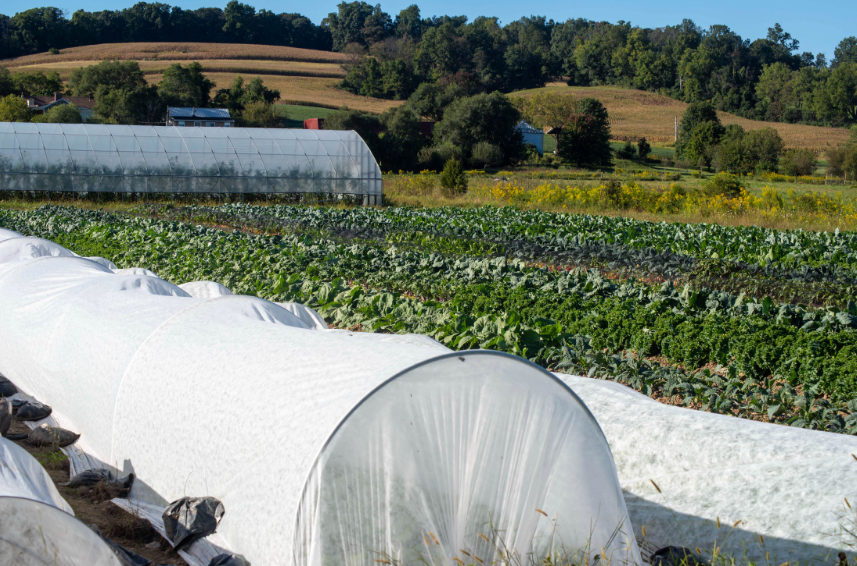
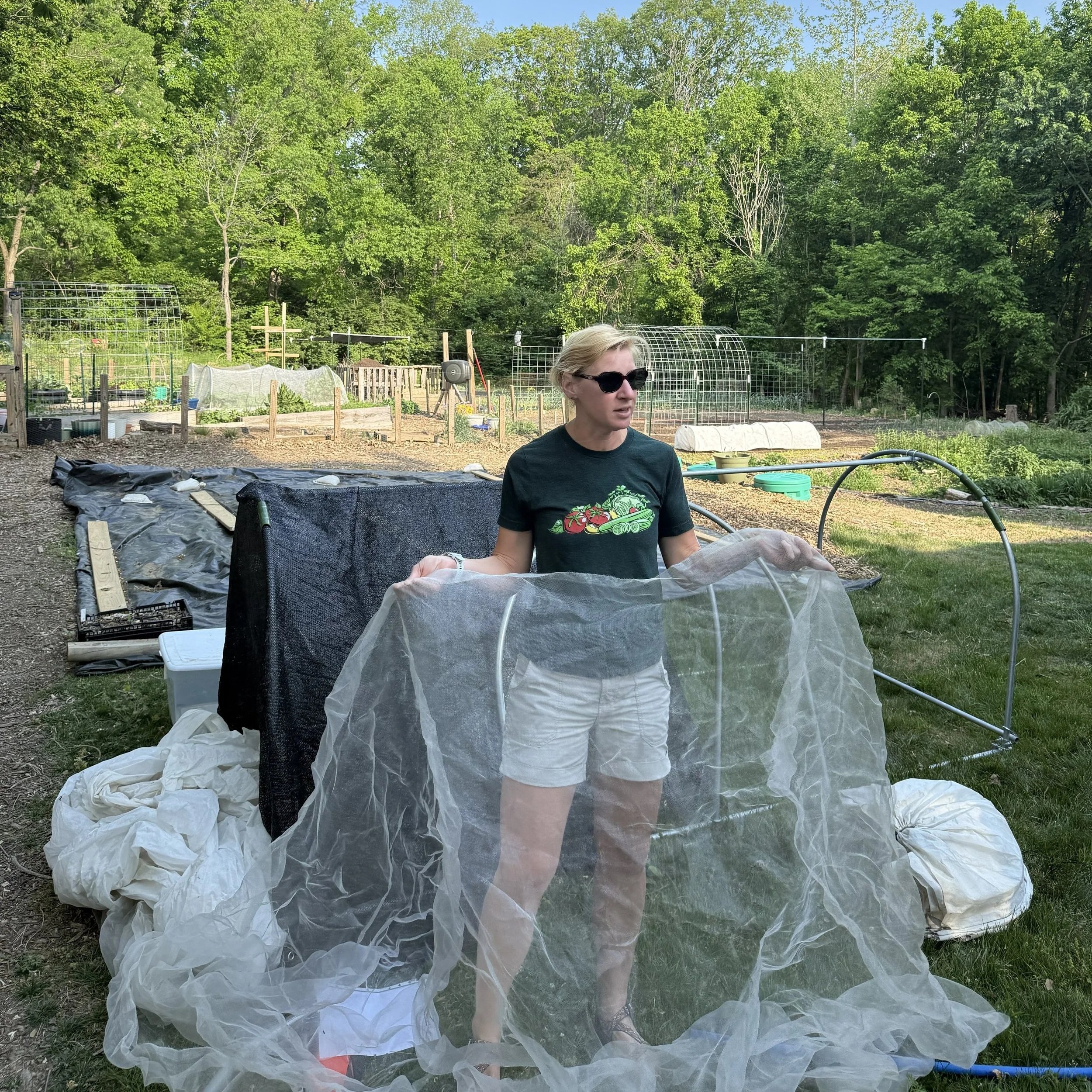
A low tunnel is a simple growing structure made with hoops and a protective covering such as plastic, frost cloth, shade cloth, or insect netting. Usually 1–4 feet tall, low tunnels provide targeted protection right where crops are growing.
They can help you:
Extend the growing season by protecting crops from frost, cold, and wind.
Manage heat with shade cloth during hot summer months.
Reduce pest problems with insect and bird netting.
Protect soil from heavy rain, wind, erosion, and compaction.
Improve growing conditions by creating a more controlled environment for your crops.
Key Features:
Modular — Combine hoops to cover one or multiple beds.
Flexible Covers — Use poly, frost cloth, shade cloth, or netting.
Customizable — Available in different heights, widths, and lengths.
Movable — Easy to remove, relocate, and store.
Easy Access — Covers can be lifted, rolled, or removed as needed.
Because coverings can be changed or removed as conditions change, low tunnels are a flexible tool that can be used throughout the growing season.
Cost-share details
This is a reimbursement program awarded after the low tunnel installation has been completed. All low tunnel construction should follow recommended procedures and best practices.
Upon completion, the low tunnel owner must submit a project completion form along with receipts and supporting documentation.
The cost-share amount is a 50-100% of the total cost for materials, with a maximum allowable reimbursement of $1,500.00. Percentage of the cost-share will be determined by the applicant's ranking score.
Who can apply?
The cost-share is available only to Jefferson County residents, community spaces, and businesses. Non-profit organizations can also apply if they grow food for distribution in the targeted urban areas. Submitted applications are ranked by the Jefferson County Conservation District.
Priority Considerations
Priority will be given to applicants who:
Live in a Low Income–Low Access (LI-LA) area, as defined by the USDA
Intend to grow produce or other food within the low tunnel
Are experienced farmers
Demonstrate a level of community involvement
Low Tunnel Requirements
Hoops: Must be made of ½-inch or larger EMT conduit or a comparable material.
Row Cover: Must be UV-stabilized and designed for long-term use.
Placement: Structures must be installed clear of buried public utilities.
Use: Low tunnels may be used for any purpose that:
Helps increase the supply of food or agricultural products for Jefferson County communities; and/or
Supports the conservation of natural resources.
All low tunnel construction should follow recommended construction procedures and best management practices.
Why Low Tunnels?
Low tunnels are a practical, adaptable tool for growing more food, protecting natural resources, and making the most of your farm or garden.
Low tunnels give growers a simple, flexible way to protect crops, extend the growing season, and make the most of every growing space.
-
Get crops started earlier in spring and keep them growing later into fall.
-
Help shield plants from frost, wind, heavy rain, heat, and common pests.
-
Support succession planting and create opportunities for production across more seasons.
-
Manage temperature, moisture, and exposure to create a better environment for crops.
-
Easily remove, relocate, and reconfigure tunnels as crops move through your rotation.
-
Protect soil from erosion and compaction while allowing covered areas to be opened when rainfall is beneficial.
Before you apply:
01 — Locate Your Utilities
Contact the appropriate utility companies to mark buried utilities on your property.
Low tunnels cannot be constructed over buried public utilities.
02 — Create a site plan
Contact the Conservation District if you need assistance.
A Conservation District representative can help:
Identify the ideal location of your low tunnel installation.
Determine if the site is suitable for construction.
03 — Contact Suppliers
Before applying:
Get an estimate for your project.
Make sure materials can be obtained in time.
Confirm that the project can be completed by December 31, 2026.
Get ready for next year.
SEPT. 1–30
2026 application window
OCT. 7
Applicant notification
NOV. 18
Submit purchase order
DEC. 31
Project
completion
JAN. 12
Submit final paperwork
Frequently Asked Questions
Who can apply?
The program is available to Jefferson County residents, community spaces, and businesses. Non-profit organizations can also apply if they grow food for distribution in the targeted urban areas. Submitted applications are ranked by the Conservation District.
1
Approved applicants may receive reimbursement for 50–100% of eligible material costs, up to $1,500. The reimbursement percentage is based on the applicant’s ranking score.
How much is the cost-share?
2
Low tunnels can be used for a variety of agricultural purposes. The project must either help provide food or agricultural products for Jefferson County communities, support conservation of natural resources, or both.
What can my low tunnel be used for?
3
Can I purchase materials before I am approved?
4
No. Materials purchased before program approval are not eligible for reimbursement.
Hoops must be ½-inch or larger EMT conduit or a similar material. Row cover must be UV-stabilized and designed for long service life.
What are the criteria for materials?
5
Can I pay for the project with cash?
6
No. Cash purchases will not be accepted.
Need a hoop bender? You can borrow ours.
The Quick Hoops™ Low Tunnel Benders 3-foot Bender model easily creates hoops ranging from 3-feet wide all the way up to 6 feet.
Check out the manual before reserving to see if it will meet your needs.

Low tunnel installation complete?
Upon installation completion, the low tunnel owner must submit the following to receive their cost-share reimbursement:
Project Completion Form
Receipts/invoices (dated after program approval)
Proof of payment (canceled check or credit card statement)
Site visit completed by a Conservation District representative
NOTE: No cash purchases will be accepted.
